Stop CANAMEX, Stop the Intermountain West Corridor and I-11! Stop the Sun Corridor! Stop the 202!
Showing posts with label loop 202. Show all posts

Wednesday, August 5, 2015

Arizona-Mexico Trade: Inroads to private gain, Part 1


This series is dedicated to Krazy Bill.


If Arizona destroys part of South Mountain/Moahdak Do'ag to build the freeway, it will to a large degree support the trade traffic recently being promoted by the new Governor Doug Ducey in collaboration with one of the biggest beneficiaries of NAFTA-related reforms, the Mexican extreme billionaire Carlos Slim.
 
Yes, the South Mountain Freeway/Loop 202 extension concept dates before NAFTA, but Arizona's promotion of trade with Mexico has accelerated in the past couple of years, with an emphasis on the Phoenix/Tucson area as a trade hub called the Sun Corridor. Another road, Interstate 11, a mega-project that would connect Las Vegas with Phoenix and beyond creates a north-south trade route.

Costing billions of our tax dollars, the planned roads and other infrastructure would physically facilitate the trade that business and politicians desire. The federal and local facilitation of a public-private partnership (P3) arrangement, also aligned with free market ideology, is what seems to be pushing the Loop 202 plan along. A P3 can be understood as federal subsidization for private companies to build infrastructure that would prioritize projects that would benefit other private companies, such as mining companies--again, with our tax dollars.

There is a much-increased emphasis on infrastructure for trade with Mexico—a country whose people, except for the rich minority, were and continue to be negatively impacted by NAFTA and associated reforms and intervention including the drug war. The international trade corridor through Arizona would further promote the use of cheap labor south of the border, which also impacts US jobs, as many have experienced.

Ducey has gotten a lot of positive press in Arizona for reaching out to Mexico, but one can't help but notice, if one is aware of the circumstances in Mexico, the complete silence in this same press coverage around the recent and continuing homicides, disappearances, torture, massacres, and kidnappings in Mexico—something that should factor into a discussion on trade with our "good neighbor" to the south. Whether the authors and editors are ignorant, in denial, or playing pretend, this speaks to the successful public relations campaign to brand Mexico as tame and stable. The denial also stems from the fact that the same policies that support free trade with Mexico are largely to blame for this violence.

It wasn't that long ago that the threat of spillover violence was used to justify anti-immigrant laws and border militarization, but now the tragedy and turmoil that is in large part due to these free trade reforms can be ignored with the help of some very powerful people. Does Ducey actually believe that increasing trade with Mexico will improve the economy and well-being of both countries, as he says, or is it just media spin to attain infrastructural improvements for business gains?

Despite his expensive PR campaign, Mexico's president Enrique Peña Nieto is suffering a crisis of legitimacy, not only because of "El Chapo" Guzman's recent escape from prison, but due to the recent attack on the students of Ayotzinapa last fall—to name only the most attention-grabbing recent incidents. Meanwhile, the violence in Mexico would not be what it is if it weren't for neoliberal reforms and especially the Mérida Initiative, a U.S./Mexico plan purportedly meant to curtail the drug trade, but with the effect of benefiting transnational corporations seeking to accumulate more wealth from Mexico at the same time as increasing militarization and violence across the country.

The following is part one of a series in which the broader implications of Arizona-Mexico trade will be discussed as it relates to the public relations campaign to portray a calm and secure Mexico ready for trade. Both in Ducey's constant references to SB 1070 and Jan Brewer, and in Peña Nieto's enlistment of pro-NAFTA international consulting agency, can be seen a propaganda campaign to portray Mexico, NAFTA, and the drug war, as successful while achieving a misdirection away from Arizona and the U.S.'s role in perpetuating the violence. (See Part 2 here). Increased trade with Mexico will lead to increased border militarization, with consequences for those living along the border and those trying to cross. Attempting to politically and economically stabilize Mexico for transnational investment comes at an immense price. The series will address the pivotal roles of Governor Ducey and Carlos Slim (and a few other players) in the countries' relationship and what Slim's wealth and influence represent (Part 4 is in progress). The promotion of economic development is not about improving our lives, but is about cheap labor, resource extraction, and privatization (See Part 3 here). The relationship between Ducey and at least one mining company that epitomizes this, exploiting its workers and contaminating the environment, will be discussed as well. Finally, how trade and infrastructure impact and create demand for water will likely be included in the series.


The Roads

Back in April, multi-millionaire sports executive Jerry Colangelo and another Arizonan in real estate, Michael Ingram, who would both profit from one of the proposed alignments for Interstate 11, extolled the corridor in conversation with Carlos Slim, convincing him to promote its extension down to Mexico City.

Similar discussions about facilitating Arizona-Mexico trade were continued when Governor Ducey, claiming to polish Arizona's reputation that former Governor Brewer tarnished with SB 1070, took a trip to Mexico city in June, meeting with Slim again and also meeting with mining executives, other business leaders, and working on a few agreements with Mexican officials.

Arizona sees a lot of room for improvement if the state is to compete with Texas, California, and New Mexico in facilitating trade with Mexico. Arizona infrastructure, like roads such as the South Mountain Freeway Loop 202 Extension and Interstate 11, as well as border ports, rail, etc. are being built or expanded at the behest of business interests looking to create an international trade corridor through Arizona.

Interstate 11 has been in the works for years. After much lobbying, the interstate was designated as such by congress through MAP-21 legislation in 2012, due to its importance in completing the international corridor for trade freight traffic between Phoenix and Las Vegas since Route 93 was inadequate. The rest of what was called the "Canamex Corridor" already exists. However, as the years have gone by and different influences come into play, the emphasized international trade route has changed in some ways.

For example, likely due to the influence of Harry Reid and others in Nevada, the international trade corridor referenced with the Interstate 11 is called the Intermountain West Corridor and is a more western route north of Las Vegas to go through Reno then Oregon and Washington, rather than cutting over to Utah then through Idaho and Montana.

Because an interstate promises access to some federal funding, some people and organizations south of Phoenix have been pushing to have the Interstate 11 officially run down through Tucson and Nogales to the border with Mexico, as well. On July 30, the US Senate passed the Developing a Reliable and Innovative Vision for the Economy (DRIVE) Act, which "would designate the Sonoran Corridor as a future interstate to connect I-19 to I-10 south of the Tucson International Airport, and extend the future I-11 from Phoenix north to Las Vegas and I-80, and south to Arizona’s southern border."

Update: ADOT reported on December 4, 2015 that "The Fixing America’s Surface Transportation Act, or FAST Act, formally designates Interstate 11 throughout Arizona. It states that the I-11 corridor will generally follow Interstate 19 from Nogales to Tucson, Interstate 10 from Tucson to Phoenix, and US 93 from Wickenburg to the Nevada state line. From there, the Interstate 11 corridor extends north through Nevada, and is designated as an interstate highway north of Las Vegas, through Reno, connecting to Interstate 80...
ADOT is beginning work on a Tier 1 Environmental Impact Statement covering the area between Nogales and Wickenburg." More information at ADOT's website.

The Sonoran Corridor, which would run through Avra Valley and benefit corporations like Raytheon, may act as a piece of the Interstate 11 by connecting Interstate 19 with Interstate 10 south of Tucson. In reference to the legislation introduced, McCain said, “The Sonoran Corridor project will have a significant impact on state, regional, and national commerce by connecting major trade routes and improving transportation along the CANAMEX Corridor and the future Interstate-11.” I-11 legislation, a few steps from being enacted, would lead the way for funding from the federal government.

"Specifically, its designation would provide both states’ Departments of Transportation the flexibility to develop a Northern Nevada and Southern Arizona connectivity corridors as part of the I-11 effort," states the DRIVE Press Release. This means it'll be easier to prioritize and get financing for the transportation routes that are meant for trade.

Additional efforts in Nevada are being made to get funding for the interstate. Currently there is no sources of funds in either state, even for the route that is already designated as an interstate, and it will likely be composed of public-private partnerships, facilitated and incentivized by the federal government, either way. The first portion, the Boulder City Bypass, which may be contaminated with asbestos, is already under construction.

Now due to the meetings with Carlos Slim, Mexico may in the future also officially recognize I-11 as extending to Mexico City. Although perhaps not officially, the trade corridor called Canamex currently has its southernmost point at the Port of Guaymas where powerful mining companies such as Freeport McMoran (who was present at the meetings in Mexico City) and BHP Billiton (of Resolution Copper who plans to destroy Oak Flat/Apache Leap with their copper mine) do business. Mexico has already made improvements to Route 15 at the behest of Arizona officials.

An announcement came out prior to Ducey's trip to Mexico that it was expected that the meetings would result in four agreements, one of which included I-11's extension to Mexico City, but only three agreements resulted. What resulted regarding the I-11 issue was less specific according the the US Embassy website:
"[A Memorandum of Understanding] between Arizona Department of Transportation (ADOT) and the Ministry of Communications and Transportation of Mexico (SCT) for the establishment of a binational commission that will endeavor to conduct a study on how to further optimize the Arizona-Mexico trade corridor, including road and rail infrastructure and industrial clusters."
From Transportation and Trade Corridor Alliance website. The small square does not seem to include the Loop 202 extension but clearly that area is quite central to the trade corridor traffic flows.

While Interstate 11 is a long way from being completed, the Loop 202 South Mountain Freeway is nearing the beginning of construction, unless it is stopped. It has been pointed out by critics that the road is meant as a truck bypass, and although it is not part of the official CANAMEX Corridor route, it had been proposed as such (among other options) due to its location. Its position in relation to Phoenix and other freeways means it would very likely be used by many freight trucks with business in Phoenix. As shown in the TTCA website capture, the Loop 202 is in an area very central to the key commerce corridors.

From ADOT 3D Fly-Through Video
To the dismay of many, largely because it would "remove over 4 Million cubic yards of South Mountain and make a cut 20 stories high and wide enough for 8-10 lanes through 3 mountain ridges," things are moving along on the freeway. However, a lawsuit poses a serious challenge to the project. Protecting Arizona's Resources and Children (PARC brought the first lawsuit, and the the Gila River Indian Community brought the second lawsuit. (Update, read Judge rules in favor of freeway, opposition builds). A failed attempt at getting a temporary injunction against the freeway is a setback but is not wholly discouraging. Other forms of resistance including a recent protest against a Loop 202 networking event, provide avenues for those outside the legal system, especially those who don't have much faith that the system works in favor of the people or the environment, especially indigenous people and sacred sites.

Currently, there's a shortlist for the public-private partnership to build the Loop 202. ADOT announced it would release a final Request for Proposals late this past spring, but it has not yet been seen. A developer will supposedly be chosen by the end of this year. ADOT is in the process of right-of-way acquisition. (Update: Connect 202 Partners was selected.)

As discussed in the "Trade and Growth" section of the post on this blog entitled "South Mountain Freeway Justified by Controversial Traffic Projections?" the traffic projections for the road, among other problems, likely were influenced by knowledge of the intentions and plans for the international trade corridor and its geographical relationship to the road.


The (Public-) Private Interests

Ducey may be taking credit for initiating a trade relationship with Mexico, but much has been in the works over the last few years. Notably, two Arizona trade offices have been opened in Mexico. Arizona, with the cooperation of Mexico has initiated upgrades to border ports and security, and expansion of a military checkpoint between Hermosillo and the border with Arizona, with Mérida Initiative funds. Of course, the Interstate 11 has been in study phase since 2012 as well.

The Arizona Department of Transportation (ADOT) has led the charge in driving these projects, along with the Arizona-Mexico Commission (AMC), the Arizona Commerce Authority (ACA) and their offspring: the Transportation and Trade Corridor Alliance (TTCA). The TTCA was created by former governor Jan Brewer as a public-private partnership unit that would carry on the role of the Governor's Camamex Taskforce (which had been started by the previous governor, Janet Napolitano). Led by members of ADOT, AMC, and ACA, with various private participants (including Freeport McMoran), the TTCA acts as Arizona's freight advisory committee. The AMC, with members including the governor and the director of ADOT, as described in Arizona's Roads Meant for Trade with Mexico Despite Corruption and Violence?, is largely responsible for moving the trade corridor along.

As outlined in From Ayotzinapa to Arizona: NAFTA Persists, AMC Canamex Expert and co-chair of the TTCA, Jim Kolbe, a former Congressman, was involved in the passing of NAFTA twenty years ago, along with various current colleagues.

A number of organizations including ACA as a presenting partner, and AMC as a sponsor, were involved in putting on the Carlos Slim event in Phoenix in April. Both men reported to have discussed I-11 with Slim, who are interested in the road passing along their Douglas Ranch project, are on the board of directors of the ACA; Jerry Colangelo also having been on the board of directors of the Interstate 11 Coalition, and Michael Ingram also on the board of directors of the AMC.

Marco Lopez, who works for Carlos Slim, was involved in the AMC and was central to the coordination of Slim and Ducey's meetings wrote in April for the Arizona Republic,
In 2009, Gov. Jan Brewer passed HB 2396 to promote the use of public private partnerships to improve Arizona's aging transportation infrastructure. We need to be far more aggressive in using that law to leverage private sector capital and expertise so we can improve and build new transportation infrastructure and safely increase the flow of trade and commerce into the United States and Mexico.
The AMC and the TTCA are very much in favor of the public-private partnership (P3) approach to the problem of lack of funds for transportation infrastructure. Essentially a form of privatization that is subsidized via federal incentives such as tax-free bonds and loans with low interest rates, P3s allow for the leveraging of state assets for projects that might not otherwise have funding. It is largely a project of financial institutions and consultants who profit off of complicated financial strategies, and is promoted by construction companies and engineering firms due to the promise of more funded projects. State officials are interested in gaining access to federal funding and being able to advance projects that businesses gain from, such as the Interstate 11 which would benefit Jerry Colangelo and others with real estate along a possible route.

Again, the plan is for the South Mountain Freeway to be a public-private partnership. It is likely to be a test run for more P3s in Arizona, including the Interstate 11.

Arizona officials would argue that all of this is for economic development. That's what they said about NAFTA and NAFTA has led to the enrichment of the few, and problems for many many others. Trade with Mexico benefits the mining and energy companies, and industries that rely on cheap labor and low environmental standards. Arizona wants to deny the damage it does by continuing this trade relationship, but check back for subsequent parts of this series that explores this further.

Read Part 2 here
Read Part 3 here.

Friday, March 13, 2015

AOYC: It’s time to turn up the heat! FHWA In Favor of Building Freeway!

from https://aoycblog.wordpress.com/2015/03/13/its-time-to-turn-up-the-heat-fhwa-in-favor-of-building-freeway/

March 12, 2015
On March 5th, 2015, the Federal Highways Administration (FHWA) released their Record of Decision (ROD) in favor of building the South Mountain Freeway. The ROD is a document that gives the Arizona Department of Transportation (ADOT) the approval to begin acquiring right of ways and to begin construction of the 22-mile-long freeway that blasts through three ridges of Moadak Do’ag (South Mountain). Moadak Do’ag is sacred to all O’otham tribes and holds cultural significance to eighteen other tribes.

This project has been opposed by members of the Gila River Indian Community since the 1980s. There are numerous harmful impacts of freeway construction which include destroying the prehistoric villages of Villa Buena and Pueblo del Alamo, the destruction of threatened/endangered animal habitats, and the destruction of plants that are central to traditional O’otham culture. Environmental impact studies of the 202 freeway also state that the habitat for wild horses in Gila River would be irreversibly lost if the freeway is built, and that no alternative habitats for the wild horses exist. One of the Gila River Indian Community’s entertainment destinations is named after the wild horses that the freeway would destroy if it is built. The path of the approved design also would destroy many groundwater wells, with no replacement wells planned for by ADOT. It is for these reasons and many more that in 2012, the Sierra Club named the South Mountain freeway one of the worst transportation projects in the United States.

Read more (seriously, follow the link and read the rest)...

Thursday, February 5, 2015

South Mountain Freeway Justified by Controversial Traffic Projections?

For an updated exploration on the topics herein and on the public-private partnership for the South Mountain Freeway, see "Freeway Could Take a Toll on Arizona" posted February 2016.

A consultant listed on the Environmental Impact Statement for the Loop 202 South Mountain Freeway, Wilbur Smith Associates (now CDM Smith), is now known for their controversial socioeconomic and traffic projections across the country, which have in some cases led to toll road bankruptcies. These types of forecasts, and in particular their use to justify the Loop 202 extension, are questionable, as you'll see. The inaccuracy of traffic projections in general is a problem across the world, but Wilbur Smith's relationship to this road, including the fact that they did traffic projections for a company that wanted to make it a toll road, needs to be examined.

To be clear, while others may call for more transparency, the position of this blog is that, for a whole range of reasons, the South Mountain Freeway should not be built whether or not one can conclude that justification for the road is based on intentionally inflated projections. Even if overestimation is unintentional, the details of the Wilbur Smith issues are compelling enough to examine.

While a lot of the problems with traffic projections revolve around toll roads, these concerns are not irrelevant despite the fact that the Loop 202 is not currently being proposed as a concession project. A toll road has been considered a possibility for much of the life of the concept and its studies (1994, 1995, 2010). The relationship between Wilbur Smith (and HDR Engineering) to toll road projects for Loop 202, and the timing with which they got involved with ADOT on this project may still be relevant. Also worthy of examination is the position of ADOT's consultant, Nossaman, and their involvement in and promotion of public-private partnerships, including several of these toll roads involving Wilbur Smith.

Big Numbers

The Loop 202 South Mountain Freeway is being justified by the need to address future traffic congestion but we know at the very least that the inputs used are inaccurate. Various organizations/experts pointed out that traffic and socioeconomic projections in the Draft Environmental Impact Statement (DEIS) for the Loop 202 South Mountain Freeway were based on old data (Census 2005), as well as aggressive estimates, rather than a range of data acknowledging a margin of error and limits to predicting the future. In response to comments, one of ADOT's repeated responses is that they incorporated the new data (Census 2010) for socioeconomic projections in the Final Environmental Impact Statement (FEIS) and they determined, without explanation, that the updated data validated the conclusions about purpose and need in the DEIS. This despite the fact that updated numbers showed that population figures were significantly lower than predicted. Socioeconomic data, such as population, employment, and vehicle miles traveled (VMT) are studied to come up with traffic forecasts.

Wilbur Smith Associates (CDM Smith), while not the only consultant for the socioeconomic portion of the DEIS and FEIS for the South Mountain Freeway, likely contributed to the Maricopa Association of Government's traffic projections cited in the DEIS and FEIS. It is not simply the use of inputs such as older census data that is the issue, but likely also the method by which traffic projections are arrived at.

Wilbur Smith's exact relationship to the traffic and socioeconomic forecasts presented in the DEIS (and FEIS) are not known to this author. It may not be irrelevant that HDR Engineering Inc., a primary consultant in the traffic portion of the DEIS and FEIS, had also been involved in an attempt at building Loop 202 as a toll road. Whatever the exact relationships and intentions are, traffic projection overestimates seem to be a systemic problem.

A report that investigated Wilbur Smith and the broader problem of traffic projections stated, "'Optimism bias,' the overestimating of toll road traffic and revenue in forecasts, is endemic in the industry. One industry expert estimated the mean forecast error at 25%-30% above actual traffic based on data from 104 toll roads worldwide. A major national study and industry and media research indicate sponsor political bias and profits are key drivers of 'optimism bias' in addition to a variety of methodological issues." No matter what the cause, there may not be any real reason to build the South Mountain Freeway. However, this would not be the first time Wilbur Smith Associates' figures have been found to misrepresent reality for new roads across the country, especially for toll roads.

The recent article, "The Great Traffic Projection Swindle" scrutinizes Wilbur Smith Associates' credibility. The article describes how a Virginia-based group "collected data from 26 toll road projects on which Wilbur Smith had produced the traffic projections. During the first five years that were forecast, traffic projections overshot actual traffic every single year, and by an average of 109 percent, according to the report."

The article continues,
Phineas Baxandall, a senior researcher with the U.S. Public Interest Research Group... says the engineering firms that provide the figures know how things work. “Companies seeking investment for privatized toll roads shop for the forecasting they want,” he said. “[There's] no incentive to tell bad news. And if the deal appears promising, then the forecasting company gets other opportunities to sell further analysis, legal advice, raising debt, selling equity, etc." 
Examples are given in this article of companies, including Wilbur Smith Associates, who were promised or granted future business by toll roads after their projections were sold to investors. One example was of a "traffic forecast for the $200 million Southern Connector in Greenville, South Carolina. In that case, Wilbur Smith was offered $12 million in contracts if the bonds to finance the project were sold. Toll Roads News reports the road only saw one-third to one-half of the traffic predicted by Wilbur Smith, and declared bankruptcy in 2010." (They did collect that $12 million.) The primary company involved in the consortium that built the Southern Connector tried to build South Mountain Freeway as a toll road, as discussed below.

Another project led to bankruptcy. "Wilbur Smith Associates had predicted that traffic volumes on the Indiana Toll Road would increase at a rate of 22 percent over the first seven years. Instead, traffic volumes shrank 11 percent in the first eight. The result was financial disaster for the concession company, owned jointly by Australian firm Macquarie and Spanish firm Ferrovial. By the time they filed for Chapter 11, debt on the road had ballooned to $5.8 billion."

In the case of this Indiana Toll Road, Streets Blog USA reported in another article titled, "How Macquarie Makes Money By Losing Money on Toll Roads" that Wilbur Smith "blamed the bankruptcy on the fallout from the recession." The banks were bailed out and the companies involved, including Ferrovial--one of the companies interested in the P3 for the Loop 202--continue to make money off other projects.

The article details the complicated financial methods used to continue to profit despite bankruptcies. Chuck Plunkett with the Denver Post reported that Ed Regan, a Wilbur Smith forecaster specifically blamed "a downturn in the local manufacturing economy," for the failure of the Southern Connector. Yet as Plunkett wrote, "federal Bureau of Labor Statistics records shows that manufacturing jobs were falling in Greenville long before Regan started on the projections for the Southern Connector." Regan claimed that the forecasts were actually conservative.

The problem revolves around these financial schemes and the ways the projects are sold to the investors. "The Great Traffic Projection Swindle" article states, "UK-based consultant Robert Bain literally wrote the book on traffic projections, warning in 2009 against forecasters who blamed faulty predictions on the economy. Commenting on the flurry of global toll highway bankruptcies that was just starting then, Bain said they had 'less to do with the present economic climate, and more to do with a market readiness to be seduced by hopelessly optimistic traffic and revenue projections.'" Nonetheless, a recession is going to impact projections, but this possibility should've been and should be taken into consideration. Aside from that, what does it mean that the projections for the South Mountain Freeway initially incorporated pre-recession numbers, yet even still the FEIS basically denied that the updated and very different numbers from 2010 altered the purpose and need justification for the project?

Controversy of the Past
There's an intriguing tale about a 1995 proposal for a toll road for the South Mountain Freeway and its connection to Wilbur Smith Associates published by the New Times in 1997. Arizona's proud public-private partnership history--highlighting a variety of controversial projects taken on by Richard Lloyd Carr and his company Interwest Management--is largely explored in the article. Included are some shady dealings such as one in Apache Junction for which Carr was sued by Allstate for fraudulent revenue forecasts. Interwest later planned to build what would've been Arizona's first toll road and none other than Wilbur Smith Associates was brought in to do the traffic projections.

The consortium responsible for building the toll road was Interwest Carolina Transportation Group, LLC, which with SCDOT formed Connector 2000 Association for a project in South Carolina, which recently filed for bankruptcy due to lack of revenue, as mentioned above. Had the traffic projections by Wilbur Smith Associates been accurate, the creation of the toll road and/or the bankruptcy could've been avoided.

The New Times article details issues with Wilbur Smith and another construction company that joined the consortium for the Southern Connector, involving two South Carolina highway engineers who, after receiving bribes from the construction company and were no longer employed by the state, became employees of Wilbur Smith Associates. This all points to a suspicious relationship among transportation officials and these private entities. The article also states that Wilbur Smith "signed on with Interwest to conduct traffic studies for the South Mountain Toll Road."

Adding to this complicated mess are some other details from an article by Forbes about the Southern Connector, "When the toll road came up for bid, two experienced highway construction management companies, Flour Daniel and Perini, Harbert-Yeargin, using Smith’s figures from a 1994 study to formulate their bids, lost out to Carr’s group, which has never built a toll road. How did Carr’s Interwest win the contract? By projecting traffic and toll revenues 50% higher than in the original study made by Smith, now on Carr’s project team." This would seem to imply that Wilbur Smith increased its own traffic and revenue projections to a significant degree for the Interwest bid, or they joined the team knowing the that the projections had been inflated that much.

Supposedly because the project would not be financially feasible, the Interwest consortium decided at some point against continuing their efforts to build the Loop 202 extension. More likely it was the controversy stirred up by the media, which also caused Carr to be removed as manager and CEO of the company he essentially started under a former employer, DLR Group, and led him to sue Forbes for critical media coverage. Interwest remained involved in the Southern Connector, however. Additionally, it is no secret that toll roads would be unpopular in Arizona. If the reason for dropping it was really because the lack of financial feasibility, this might not necessarily indicate that Wilbur Smith's traffic projections weren't financially favorable. At the time, public-private partnership laws were not as conducive to profit-making as they are now. The consortium had to be set up as a 63-20 non-profit, a situation which many were skeptical of, well, except for Nossaman, the firm that acts as a consultant for various partners involved in public-private partnerships, including Interwest (at least as of 2007).

"Purpose and Need" 

Wilbur Smith's relationship to the Interwest toll project for the South Mountain Freeway might have something to do with the justification of the project. Just a few years after Wilbur Smith's job was over with Interwest, the firm was working on the road project for ADOT. In or before January 2001, HDR Engineering was chosen by ADOT to be the consultant for the "South Mountain Highway Project," specifically for the EIS, with Wilbur Smith Associates as one of the subconsultants (recall that HDR had also been interested in building it as a toll road). There was a meeting of the South Mountain Community Advisory Team in early 2002 that included someone from Wilbur Smith Associates as a staff member (and two from HDR). It seems it was this same team and around this same time that determined that the EIS process was worth continuing. It is reasonable to suspect that Wilbur Smith's projections for the Interwest toll road would not be much different from those that, just a few years later, justified the beginning of the EIS process which is the main federal legal obstacle to such a project.


Howard Shanker, attorney for Protecting Arizona Resources and Children (PARC), points out that ADOT has been purchasing land in the right of way areas of the "preferred route" for the South Mountain Freeway for over a decade. It is likely that Wilbur Smith Associates had some influence in this decision back when it started. If Wilbur Smith was ever motivated to inflate traffic numbers to justify the road as a toll road, would they ever have corrected this after Interwest was out of the picture and especially since a toll road was a consideration almost this whole time since? And is ADOT equally invested in making the road project happen even if it's not truly justified?

Even as the Loop 202 is not being planned as a toll road, there might be similar motivations to increase the numbers. The Maricopa Association of Government's incorporation of the high traffic projections to justify the building of the road would also attract companies and their financiers to a promising revenue source whether it is a toll road or not, considering that a public-private partnership has been a likelihood for a while, and tolls are not the only possible revenue stream available. At this point, many companies understand how risky toll roads are, although there are still complicated financial methods that allow for companies to lose money on individual tollways yet still profit on a larger scale. Not much discourages the consultants from projecting too high because there is no accountability.

Due to the risk of bankruptcy for toll roads, other forms of public-private partnerships (P3s) have become more pervasive and there are newer ways to profit. The particular model of P3 in the works for the South Mountain Freeway is unusual, and seems to put a lot of risk on the state and therefore the tax-payer, especially considering that the road is to be paid for largely using funds that rely on certain socioeconomic projections made by Wilbur Smith Associates (as will be discussed in Part Two).

In or before 2010, ADOT hired Nossaman as P3 Legal Advisor with Frederic Kessler as the lead attorney. Nossaman and Wilbur Smith have both been involved in a number of controversial projects across the country. Yes, they all have a lot of clients, but it may be significant that so many have had major problems.

One problem-filled project involving Wilbur Smith Associates, Frederic Kessler of Nossaman, as well as HDR Engineering, is the Knik Arm Bridge in Alaska. Although still meant to be a toll road, the bridge is transitioning to a similar P3 arrangement as the P3 for the Loop 202, no longer to be financed by the private partner due to earlier traffic projections proving overly optimistic. In this case, Wilbur Smith did the traffic projections, later also hiring HDR and another consultant to "massage" a university research institute's forecasts to make them more favorable, according to a report. The resulting forecasts were significantly higher.

The report listed yet another iffy project involving Wilbur Smith and Nossaman.
In the worst case, it took less than three years for the new South Bay Expressway to declare bankruptcy from its late 2007 opening, a situation complicated by a law suit from the road’s developers seeking additional compensation. In the end, South Bay’s equity investors were wiped out, bondholders took a major loss, San Diego had to take over the previously public-private partnership, and the value of the endeavor sunk by nearly half.
Additionally, Kessler advised on the original Pocahontas Parkway plan (as a non-profit) and continued to advise them during the 2006 transition to a different arrangement with an Australian private partner. TOLLROADSnews estimated by 2004 that the "traffic shortfall is about a third" for Wilbur Smith's projections made in 1996. The project was larger and more expensive due to the forecasted need. "[The Pocahontas Parkway Association] officials began looking for a private investor to buy out the toll road as revenues continued to lag forecasts and a default was foreseen" says the report about Wilbur Smith.

It is possible that the width for the South Mountain Freeway--eight lanes (an earlier proposal was 10 lanes)--was chosen due to traffic projection modeling for tolling. As HDR explained to ADOT more recently, the less congested the road, the more likely someone is to be willing to pay a toll rather than take a different route. So since it is not to be a toll road, and the traffic projections might be too high, does it need so many lanes, if the road is to even be built in the first place?

To get more specific on the issues with the Loop 202 traffic projections, PARC summarizes the various problems on their website,
MAG’s modeling, which is relied upon in the DEIS to establish the purpose and need for the Freeway expansion, fails to accurately identify short-range growth and uses outdated (2005 census) data to estimate long-range growth. It reports its projections in a manner that indicates that they are certain to happen, which is not supported by the data and modeling techniques used. Estimates of vehicle miles travelled [sic], which are built into the models, are also based on faulty assumptions about future driving habits.
There is much valuable information and insight contained within the comments to the DEIS, but some will be highlighted here. Kevin Kane, of the School of Geographical Sciences and Urban Planning at ASU concluded,
"...the model relied on by the DEIS to justify purpose and need based on socioeconomic factors extends aggressive, pre-recession growth rates decades into the future while ignoring recent data that reflects deep-seated regional and national structural changes that have become apparent in the last several years. MAG's modeling, which is relied upon in the DEIS to establish purpose and need for the freeway expansion fails to accurately identify short-range growth and uses outdated data to estimate long-range growth." (Comments from Special Interest Groups on FEIS, Kevin Kane submitted by Howard Shanker/PARC, B369, page 243 of PDF).
Comments from Special Interest Groups on FEIS, Kevin Kane submitted by Howard Shanker/PARC, B356, page 239 of PDF.
Considering the above information, it is relevant what information came from the consultants, particularly Wilbur Smith Associates, and how and by whom the information was interpreted. Wilbur Smith Associates are listed as a consultant in these documents, but the numbers are vaguely attributed to MAG. The documents have no authors' names. Although information about consultants or other sources of information is not specifically requested, the comments from PARC's expert Herman Basmaciyan, P.E. notes that the DEIS inadequately provides information about the data from which MAG extrapolated their findings. The response in the FEIS does not adequately address this. (Comments from Special Interest Groups on FEIS, Herman Basmaciyan submitted by Howard Shanker/PARC, B467, page 341 of PDF).

We know that ADOT is part of MAG and that Wilbur Smith has also been a consultant for various projects for ADOT over the years. We can also gather that Wilbur Smith as been involved with this project since before the EIS was even begun so they had done a lot of the groundwork. Nonetheless we don't need one single culprit to question the motivations of the parties involved and therefore the justification of the entire project. The fact that the updated census figures do not change the conclusions made in the EIS (in addition to the lack of explanation) signifies that other changes in data may not alter the assessment of MAG, ADOT, and its consultants, indicating a desire to justify it no matter what. Whether or not Wilbur Smith Associates in particular are to blame for the numbers in the DEIS and FEIS for the South Mountain Freeway, there's still a problem.

Trade and Growth

"If you build it, they will come" is clearly not always the case as the bankrupt toll road projects have seen. However, wishful thinking, rather than deceit might more likely describe the Wilbur Smith Associates' high traffic projections, although this doesn't make it acceptable. Wilbur Smith happened to have had access to insider information about plans for trade-based economic growth in Arizona which may have led to optimism bias. For example, they were involved in various studies ranging from 1997-2003 related to CANAMEX, the NAFTA trade corridor connecting Mexico with Canada, running through five US states including Arizona.

MAG, ADOT, their consultants and other organizations such as the Arizona-Mexico Commission all have an interest in selling the region as a place for investment. International trade, specifically with Mexico, is central to plans for Arizona's economic growth. Trade would supposedly bring growth and therefore, demands for new transportation infrastructure. Wilbur Smith (CDM) relies on new infrastructure projects to continue to be able to make money.

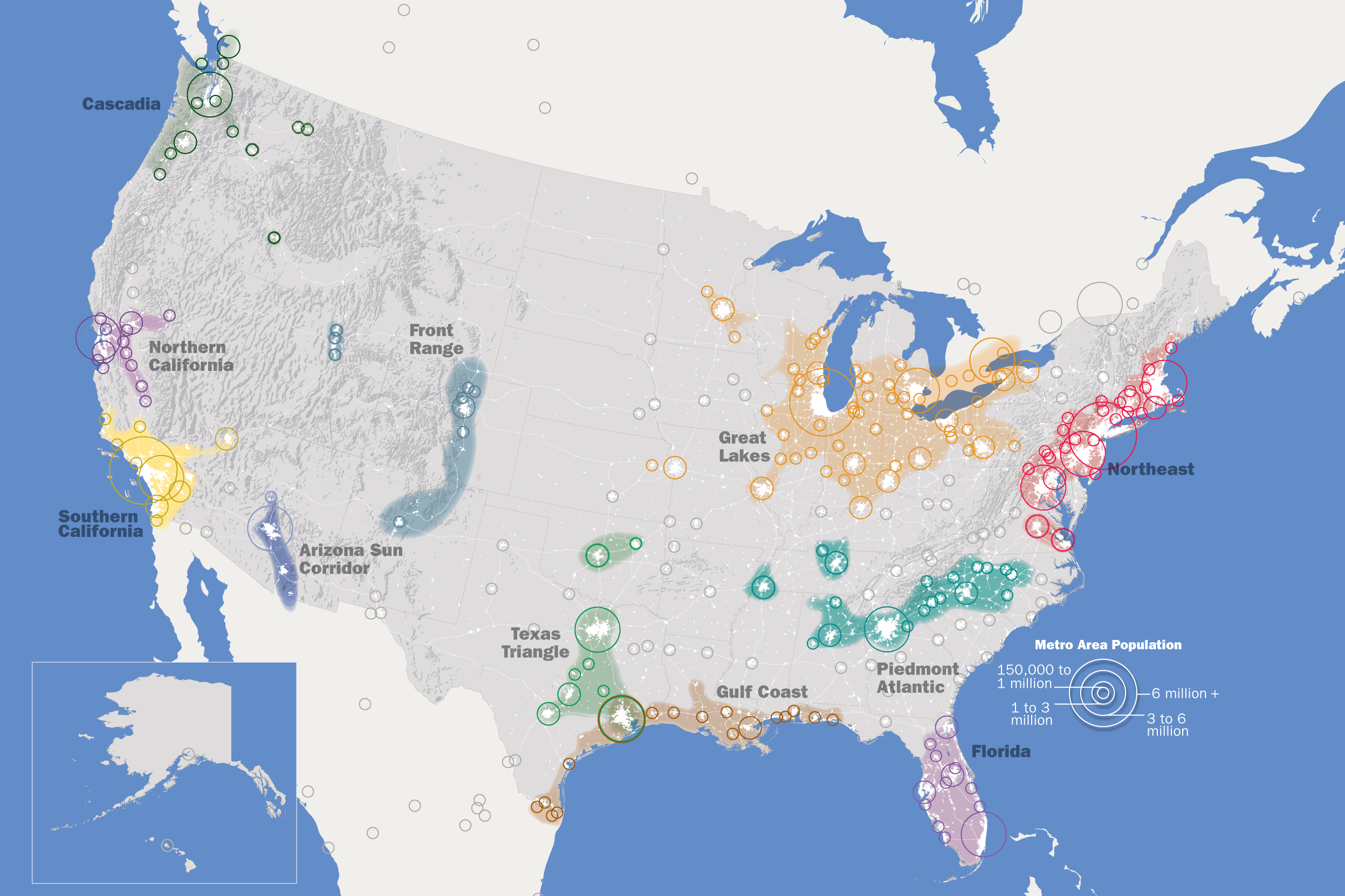
With the interests in creating the "Sun Corridor" as a trade hub, a "megapolitan" along the CANAMEX Corridor, various private parties, including consultants for ADOT, have been optimistic (with recession-based interruption) because of the moves towards encouraging increased truck traffic.


Wilbur Smith was listed as being part of the CANAMEX Consultant team. Linda Carpenter, who was involved with the CANAMEX Coalition study was also a revenue consultant as part of Wilbur Smith Associates for the Transportation Vision 21 Task Force final report to the Governor in 2001.

The Arizona Republic reported, "The CANAMEX Corridor Task Force has contracted with Wilbur Smith Associates of Columbia, S.C., to study what opportunities Arizona could get. A lot of the impact will depend on where any roads and railroads built from the port would lead."

It may seem contradictory that PARC's experts claimed both that the traffic projections were too high and that the road is meant to deal with increased truck/freight traffic. Despite the fact that it seems that Wilbur Smith's optimism bias has to do with their expectation that there will be an increase in truck traffic as part of this trade, ADOT has denied that the road is intended as a truck bypass. If the purpose and need for the road were to be justified as a truck bypass, there would be much more opposition and little support. If it is justified as addressing future commuter traffic, then it can more easily be sold to the public. And if trade increases, then Wilbur Smith's projections will not be questioned.

In other cases, Wilbur Smith Associates may choose the high end of the range of possibility regarding traffic forecasts, assuming that with increased infrastructure will come more growth. The question is how decisions about infrastructure are being made, such as with CANAMEX (of which the most recent development is the completion of the Interstate 11 study), for example, or with the way it was decided that the South Mountain Freeway should be a public-private partnership (P3). Note too that Wilbur Smith was hired as a consultant for the Office of P3 Initiatives and International Affairs, ADOT in 2010. They have been proponents of P3s for quite a while.

The extent of Wilbur Smith's relationship with ADOT and MAG may bring even more problems. While the risk of bankrupting a toll road is no longer part of the picture, the funds with which the Loop 202 extension would be paid for (to whichever private consortium wins the intended public-private partnership bid) rely on similar socioeconomic and traffic projections due to the funds coming from gas taxes, vehicle registration fees, and state sales taxes. Wilbur Smith Associates contributed to these projections as a consultant for the Arizona Department of Transportation (ADOT). If these numbers were inflated, how will that affect the state of Arizona? How many tax-payer dollars have been put into this project already, which may not even be justified? See the upcoming Part Two.

Wednesday, December 3, 2014

From the ADOT website:

Final Environmental Impact Statement Errata

As part of the public review period for the South Mountain Freeway Final Environmental Impact (EIS) Statement, it was noted that 10 comments submitted in 2013 on the Draft EIS were not documented in the Final EIS. As a result, ADOT and the Federal Highway Administration issued a formal Notice of Omission in the Federal Register on Nov. 7, 2014, and published an Errata to the Final EIS on Nov. 28, 2014. The Errata contains the 10 additional comments to the Draft EIS that were inadvertently not recorded in the Final EIS and includes the responses to those comments. The Errata is available for a 30-day review until Dec. 27, 2014.
The files below are in PDF format unless otherwise noted.

ADOT has not put out a press release, and this update to their page does not make it clear that comments are accepted now until 12/27/14.

Update: ADOT sent out an announcement via email (content below) after viewing this website. Someone there checks this website every few days. (Hey ADOT- quit being racist and trying to destroy the environment for your financial agenda!) A press release has still not shown up on their website.

South Mountain Freeway comment deadline extended to Dec. 29
Addendum to Final Environmental Impact Statement now available for review
With the Arizona Department of Transportation and the Federal Highway Administration issuing an addendum – called an Errata – to the Final Environmental Impact Statement for the proposed South Mountain Freeway, the comment period has been extended to Dec. 29 for final comments before a Record of Decision is issued in 2015.
Of the more than 8,000 comments received during the public review period for the South Mountain Freeway Draft Environmental Impact Statement, it was noted that 10 comments submitted in 2013 were inadvertently not relayed to the study team for incorporation into the Final Environmental Impact Statement, which was released Sept. 26. As a result, the Arizona Department of Transportation and the Federal Highway Administration issued a “Notice of Omission” in the Federal Register and published an Errata to the Final Environmental Impact Statement.
The Errata contains the 10 comments and formal responses to those comments; it will be available for a 30-day public review period. The Errata can be found at these 18 locations:
  • Phoenix Public Library – Cesar Chavez; 3635 W. Baseline Road, Laveen; 602.262.4636
  • Phoenix Public Library – Desert Sage; 7602 W. Encanto Blvd., Phoenix; 602.262.4636
  • Phoenix Public Library – Ironwood; 4333 E. Chandler Blvd., Phoenix; 602.262.4636
  • Phoenix Public Library – Burton Barr; 1221 N. Central Ave., Phoenix; 602.262.4636
  • Chandler Sunset Library; 4930 W. Ray Road, Chandler; 480.782.2800
  • Sam Garcia Western Avenue Library; 495 E. Western Ave., Avondale; 623.333.2565
  • Tolleson West Public Library; 9555 W. Van Buren St., Tolleson; 623.936.2746
  • Tempe Public Library; 3500 S. Rural Road, Tempe; 480.350.5500
  • ADOT Environmental Planning Group; 1611 W. Jackson St., Phoenix; 602.712.7767 (call for appointment)
  • Gila River Indian Community District 1 Service Center; 15747 N. Shegoi Road, Coolidge; 520.215.2110
  • Gila River Indian Community District 2 Service Center; 9239 W. Sacaton Flats Road, Sacaton; 520.562.3450/520.562.3358/520.562.1807
  • Gila River Indian Community District 3 Service Center; 31 N. Church St., Sacaton; 520.562.2700
  • Gila River Indian Community District 4 Service Center; 1510 W. Santan St., Sacaton; 520.418.3661/520.418.3228
  • Gila River Indian Community District 5 Service Center; 3456 W. Casa Blanca Road, Bapchule; 520.315.3441/520.315.3445
  • Gila River Indian Community District 6 Service Center; 5230 W. St. Johns Road, Laveen; 520.550.3805/520.550.3806/520.550.3557
  • Gila River Indian Community District 7 Service Center; 8201 W. Baseline Road, Laveen; 520.430.4780
  • Gila River Indian Community – Ira Hayes Library; 94 N. Church St., Sacaton; 520.562.3225
  • Gila River Indian Community Communications & Public Affairs Office; 525 W. Gu U Ki Road, Sacaton; 520.562.9851
A Record of Decision is expected in early 2015. The final decision on construction of the freeway is a cooperative effort involving ADOT, the Federal Highway Administration and the Maricopa Association of Governments as the regional planning agency. The corridor is part of a comprehensive, voter-approved regional plan developed by the Maricopa Association of Governments, and ADOT serves as the agency responsible for implementation of that plan, with the Federal Highway Administration providing the oversight required to use federal transportation funds.
For more information, visit azdot.gov/SouthMountainFreeway, email projects@azdot.gov, call 602.712.7006, or write to ADOT Community Relations, 1655 W. Jackson St., MD126F, Phoenix, AZ 85007.

Monday, October 13, 2014

Megapolitan in a Mega-Drought? A Guide to the Sun Corridor

Plans for massive new transportation projects in Arizona such as the Interstate 11, South Mountain Freeway Loop 202 Extension, and High Speed Passenger Rail seem out of touch with reality. As the urban heat island effect expands and the drought gets worse, it may be inevitable that residents will have no choice but to use expensive water piped in from desalination plants on the coast of Mexico or California. The massive amounts of energy needed to construct this infrastructure for desalination and transport also requires an immense amount of water--an endless ridiculous cycle--but one that is profitable to a few. Will those with the vision for the future of the so-called Sun Corridor, a "megapolitan" including Phoenix and Tucson, ignore these problems, and simply promote growth by building new roads like Interstate 11 and the South Mountain Freeway to allegedly improve the region's position in the global economy and provide the private sector with opportunities to make money on transportation projects?

Even the authors of the report to which most of the popularity of the Sun Corridor concept is owed admit that they're not so sure about the environmental sustainability of such a concept, yet at this point, many city and state officials as well as others take the Sun Corridor as inevitable. According to some in local government, media, and academia, it is both already the Sun Corridor, as well as a work-in-progress that requires strategic planning, infrastructure such as Interstate 11 and high-speed passenger rail connecting Tucson and Phoenix, intentional branding, and a regional identity.

Sun Corridor cheerleaders have projected that the area would double in population from 5 million to 10 million by 2050. The Sun Corridor is taken as a given, or inevitable because of this growth. It is allegedly justified both to accommodate the projected growth and to encourage it. The relationship between Phoenix and Tucson is described as natural and organic, despite the fact that the entire basis upon which the cities' settlement and expansion has been achieved has been through theft and exploitation of land, water, and other resources.

Primarily a project of think tanks with funding by large foundations, the Sun Corridor is one of several "megapolitans" in the US which were defined only about ten years ago based on projected population, proximity between two or more urban areas, an economic integration across boundaries, and their importance in global trade. In some ways it is a prediction based on a trajectory, but mostly it is an agenda for profit-seekers. The Sun Corridor concept is by no means homegrown. Some local officials adopted it after being informed by consultants of the “benefits” of the global competitiveness it would bring, or by the institutions pushing public-private partnerships or state trust land reforms for more developments or infrastructure.

Megaregions, Global-City Regions, Mega-Cities, etc. as trade hubs that surpass the metropolitan scale are not at all specific to the US, nor are they new. These and the accompanying finance, infrastructure and governance projects arose out of free-market-oriented models across the world, largely promoted and pushed by the World Bank specifically through structural adjustment programs and development over the last couple decades. The economic integration mirrors that of arrangements such as NAFTA paired with infrastructure like CANAMEX/I-11, or the European Union with their passenger rail system. The Sun Corridor is part of a much broader shift towards large private companies attempting to gain access to decision-making and tax dollars to carve their design into the land in effort to increase economic competitiveness.

Profit-making opportunities abound for the few who are in a position to take advantage if the Sun Corridor comes to fruition. First, a megapolitan is seen as an important node in global trade, a way for the region to become economically competitive, or at least this is the justification used for promoting growth. It is also an opportunity for companies to win infrastructure deals, since pushing the megapolitan concept brings along "necessity" for infrastructure like roads and rail. It may allow for changes to laws regarding state trust land, which would enable transportation projects and new development projects. Megapolitans, along with other megaregions, span municipal and sometimes state or even international lines and render the area vulnerable to imposition of new methods of organization and governance, with the full intention of providing private interests access to decision-making and new "partnerships." An arrangement called a public-private partnership (P3) is an integral part of the megapolitan plan.

Financial Interests

Big banks, consultants, engineering and construction companies, and real estate developers all have interests in these new projects, even if they're not quite all on the same page. Those with the most power and influence are the large financial institutions with their relationships to think tanks, foundations, and academia.

Despite the high degree of interest in the construction of new roads and such, the overarching motivation mustn't be overlooked. As explained in More than Bricks and Mortar, the primary incentive is likely a growing effort on the part of financial institutions and those who see common interests to find more profit-making opportunities.
Arizona Sun Corridor Partnership
"... 'infrastructure' is less about financing development (which is at best a sideshow) than about developing finance..." "what is being constructed are the subsidies, fiscal incentives, capital markets, regulatory regimes and other support systems necessary to transform 'infrastructure' into an asset class that should yield above average profits." 
Public-private partnership (P3), a variation on privatization, is the increasingly preferred “innovative financing solution” used to accomplish arrangements for transportation projects, sometimes involving toll roads for example, but often instead, companies get paid through taxes. P3s may be somewhat new to the US, but they're not new to the world. Since the 1980's, investment banks have developed new ways of making sure they receive full repayment for loans to countries across the world, rather than accepting when they've made bad investments. Repayment was ensured through the International Monetary Fund (IMF) and the World Bank, which saw major neoliberal influence in the early 80's, with a major role played by the Rockefeller Foundation, whose sway did not stop there. Indebted countries were then required to make institutional reforms called "structural adjustment programs" which cut back on social welfare programs and opened the country up to privatization and further foreign investment. Increasingly, investment banks and others have sought opportunities for profit-making in various developing countries, but also in Europe and North America through P3s for infrastructure projects. While structural adjustment programs had largely functioned as austerity measures and accepted only as conditions for accessing loans (with little to no choice), P3s in the US are portrayed as smart options for building roads and such.

In the early 2000s, financial institutions began to arrange for public-private partnerships (including the reform of state laws to enable P3s) to fund infrastructure projects in the US. These ranged from preservation and repair of old transportation infrastructure to development of new infrastructure, specifically trade corridors and transportation that would facilitate conurbation, such as intercity passenger rail. The relationships between the World Bank, Rockefeller Foundation (and other Rockefeller institutions and individuals), JP Morgan Chase, the Brookings Institution, and beyond is integral to this direction. The projects that get completed will have more and more to do with what these elite institutions decide to arrange financing for.

The "Megapolitan" in particular was conceptualized in the mid-2000s. It largely arose out of a graduate urban planning studio at University of Pennsylvania School of Design in 2004 called "Plan for America" involving the Regional Planning Association (RPA) and the Lincoln Institute of Land Policy (with connections to the World Bank and close ties to the Brookings Institution). RPA and the Lincoln Institute, sometimes along with the Rockefeller Brothers Fund, Rockefeller Foundation, and/or the Ford Foundation sponsored several more forums, conferences, studies and documents. Out of this came America 2050 (funded by the Rockefeller Foundation through RPA, as well as the Ford Foundation), which is a primary proponent of the megapolitan concept, along with high-speed passenger rail.

Central to the definition and promotion of megapolitans and the Sun Corridor is Robert E. Lang, originally of Virginia Tech, with fellowships through the Lincoln Institute of Land Policy and the Brookings Institution and involvement in America 2050. He co-authored numerous papers on US megapolitans, as well as the book Megapolitan America. Making the "Sun Corridor" a much more recognizable name, he worked with the Morrison Institute (with Grady Gammage Jr.) on the Megapolitan: Arizona's Sun Corridor while a visiting professor at Arizona State University. Lang became a spokesperson for the concept.

In 2008 when this Morrison report came out, the Arizona Republic printed an article in which Lang (with John Stuart Hall) revealed some of the primary reasons for interest in the Sun Corridor:
Mega regions will be closely watched because of the importance of more people to federal funding formulas (such as with transportation), marketing targets and venture-capital options.
The Sun Corridor also has unique challenges. For example, how state trust land will be developed is a critical wild card since more than a quarter of the Sun Corridor is managed by the State Land Department.
State Trust Land

In the context of a major drought, imagine a whole new city of another million residents being planned south-east of Phoenix. The Lincoln Institute of Land Policy has been particularly interested in state trust land reforms, notably in Arizona for this project called the Superstition Vistas.

State trust land was provided to various states by the United States Congress for each state to lease or sell as a way to generate revenue to benefit public institutions such as schools. Currently, Arizona state law requires that parcels of land are sold at auction to the highest bidder, making it nearly impossible for such a large section of land to be purchased with one central plan in mind. Most of the planning for Superstition Vistas dropped off due to the recession, but the land, or some of it, will likely be up for auction soon. The planning has taken place with the hopes that legal obstacles can be overcome.

Prior to the Sun Corridor report, the Morrison Institute (with Lang and Gammage) was commissioned by the Superstition Vistas steering committee for a study on the development of the land which they published in 2006 (The Treasure of the Superstitions). The steering committee also brought in the Lincoln Institute of Land Policy and the so-called conservation group, the Sonoran Institute based out of Tucson, around which time, the two groups created a joint venture.

Interest in this project and the involvement of Lang and the Lincoln Institute  seems to have been integral to the advancement of the megapolitan concept and the Sun Corridor in particular. Characterizing the area as a megapolitan region could be used to justify a development project like the Superstition Vistas and the necessary state trust land reforms, and accommodate cross-boundary governance which could more easily bring in private interests. Changes to the state trust land laws in Arizona would facilitate other development and transportation infrastructure projects, such as Interstate 11 connecting Las Vegas with Phoenix and potentially beyond. According to Megapolitan: Arizona's Sun Corridor, "...this effort could become a model for mega-scale thinking about state trust land and its role in the future of Arizona."
To recap and add some context, Robert Lang and the Lincoln Institute got involved in the Superstition Vistas project around the time that Lang (with his fellowship from the Lincoln Institute) was working on the megapolitan concept. The Morrison Institute Sun Corridor report was published two years after the Superstition Vistas report. Also significant may be that in 2005, the Lincoln Institute hired a new president, Gregory Ingram, who had worked for the World Bank and International Finance Corporation (the World Bank's private arm that is heavily involved in infrastructure investment). Ingram remained president until 2012 and may have had influence on the direction of the Institute in favor of the megapolitan concept. Also significant is that the Arizona state land department Commissioner as of 2012, Vanessa Hickman, sees importance in the success of Superstition Vistas and is now also on Arizona's Transportation and Trade Corridor Alliance (TTCA), a public/private entity that promotes the importance of "key commerce corridors"--essentially trade infrastructure.
The Morrison Institute reiterates the importance of this land in their 2012 report. "The 2.4 million acres of State Trust Land that make up 18% of the total Sun Corridor area will be critical to the future growth of the area." Additionally, they emphasize the role of this land for high speed rail. "It is possible to site a high speed rail line between Phoenix and Tucson largely on state trust land. While there are considerable legal challenges to this, the rewards would be substantial." 
Freeways and High Speed Passenger Rail
 
The importance of high speed rail (HSR) to the megapolitan and megaregion concepts can not be overstated. It is difficult to determine whether rail-builders' interest was what boosted the megapolitan idea, or if it is the megapolitan concept that requires the intercity rail. What is clear is that HSR would play a very important role in tying the urban areas together.
The Arizona Department of Transportation has a study in the works for a high speed passenger rail between Phoenix and Tucson. Of the three routes they’ve narrowed it down to, the eastern-most (orange) alternative runs right through the area some planners still hope will be the Superstition Vistas. The central (yellow) route could also serve this area.

The first of five objectives of the Sonoran Institute, one of the main promoters of the Superstition Vistas project, was to “promote a commuter rail system linking Phoenix and Tucson," according to their 2010 publication “Riding the Rails to Sustainability,” as part of their Sun Corridor Legacy Program.

While the best selling point for megapolitan development is high speed passenger rail as an alternative to driving, it is not as incompatible with new highways as it's made to seem. Certain environmental non-profit organizations citing research on megapolitans and population are promoting studies that show a decreasing number of drivers and therefore less need for new highways, and yet the megapolitan vision requires new roads as well, particularly the important trade corridors. Specifically, USPIRG and AZPIRG are funded by the Rockefeller Foundation for their HSR projects, and their publications reference America 2050, the primary promoter of the megapolitan concept, which is also funded by the same foundation. Aside from America 2050, most of the promoters of pairing the megapolitan concept with passenger rail also see CANAMEX or trade corridors in general as necessary endeavors.

While AZPIRG has solicited support for their HSR campaign from groups opposing Interstate 11 and the South Mountain Freeway, they likely will not join the opposition to these roads themselves, other than releasing a report naming the I-11 as one of several money-wasting “boondoggles.” It may be lost on them that the Sun Corridor concept justifies and even requires the trade corridor that I-11 would become, and the truck bypass that the South Mountain Freeway/Loop 202 extension would provide. The megapolitan is nearly always portrayed as an international trade hub, which requires massive multi-lane roads for freight trucks. "A successful Interstate 11 will be a smartly designed multi-modal trade corridor that yields multiple benefits for rural and underserved communities on both sides of the U.S.-Mexico border," is the opinion of the Sonoran Institute, or at least its Sun Corridor program director, who recently wrote in favor of the I-11. Dowdy lists rail specifically in an October 8th pro-I-11 commentary.

This is not the only mention of I-11 having multiple modes for transportation (and possibly for energy and even water). Potentially, the excitement for HSR could inadvertently be used to facilitate an acceptance of I-11, even despite PIRG's portrayal of I-11 as a boondoggle in their vaguely pro-HSR report (the report is largely based on their Rockefeller Foundation-funded research by both PIRG and the Frontier Group including the more blatantly pro-HSR "A Track Record of Success"). In a September 29th letter to the editor from AZPIRG, the director wrote, "We agree that 'this isn't about cars vs. transit' and that there should be a larger vision for an Intermountain West multi-modal corridor." The AECOM Sun Corridor report states that there's a potential to share right-of-way between rail and highway. Additionally, ADOT's 2011 Rail Plan (prepared in part by AECOM as a consultant, including Mike Kies and John McNamara who are involved in the I-11 Study) stated, "The proposed Interstate [11] route may be developed as a multimodal corridor, including freight rail, and is part of the Canamex high priority corridor, which is envisioned to include intercity or high-speed passenger rail service." Again, even if the I-11 is not justified by pairing it with HSR, there is demand for trade corridors with or without HSR.
from ADOT's State Rail Plan 2011
 Due to issues with increased development contributing to pollution, the urban heat island effect, increased water usage, impacts to wildlife, displacement of people, and damage to South Mountain in the case of the Loop 202 extension, the Sun Corridor's architects know that this megapolitan idea will only be accepted if it can be portrayed as “green”--as environmentally sustainable and responsible. But there are many ways of making something appear green that really isn't, such as can be seen with market-based mechanisms which involve turning things into commodities such as carbon for trade. Greenwashing is a term used to refer to the "unjustified appropriation of environmental virtue by a company, an industry, a government, a politician or even a non-government organization to create a pro-environmental image, sell a product or a policy," according to SourceWatch. This is not to imply that the benefits of HSR are enough to greenwash trade corridor infrastructure. HSR also requires a certain amount of greenwashing to justify itself. And this is not the only way that paving over the land to make space for transportation will be greenwashed.

HSR map overlaying Megapolitan map from USHSR
High speed rail would not only be used to make the megapolitan or trade corridors acceptable. It supports the concept of the megapolitan as a node in international trade, it is meant to facilitate regional identity and economic integration, it is another piece of infrastructure that provides finance opportunities, and would contribute to the destruction caused by increased development. It is true that HSR makes sense to many in an era of diminishing oil. But the political and economic stability sought by having alternatives to oil-based transportation is meant to support commercial and financial productivity, not to save the planet.
That which primarily inspired early proponents of HSR including Robert Lang to promote US megapolitans paired with HSR is the European model of regionalism and the ways HSR facilitated economic integration (the EU) and regional identity. Lang and a couple of RPA/Lincoln Institute colleagues promoted HSR as early as 2005, while most others (Brookings Institution, AECOM, PIRG, and even Lincoln Institute as a whole) didn't pick up on it in any significant way until 2009 when Obama promised billions of dollars in federal funds for HSR, at which point the HSR lobby grew exponentially. State officials, but especially the private sector, have gathered that alternative modes of transportation are necessary and desired, yet profit is the underlying motivation. Legislation continues to be introduced to facilitate more HSR in the US. Rockefeller Foundation/America 2050's U.S. High-Speed Intercity Passenger Rail Program has made investments of $10.1 billion in high-speed and conventional passenger rail corridors across the country, according to a 2011 report. How much money would their associates (board members even?) stand to make from these projects? 

Private-Sector Imposition

Most likely any high speed rail project in Arizona, if it gets built, will be a public-private partnership (P3), like many are in Europe. The way things are going, the same could be said for roads as well. P3s can involve concession such as rail fares or tolls on roads, but can in some cases allow for an arrangement in which private companies can access financing that they couldn't otherwise, in the form of low-interest federal loans, tax-free bonds, and payments from tax-payers via local government. P3s are more attractive to governments because the arrangements allow for getting transportation projects finished without relying on the minimal government funding, although they often don’t work out in the public’s favor. The companies themselves are interested in profit, and on a larger scale, financial institutions are able to make money as well.
As described in More than Bricks and Mortar, "Under PPPs, the private sector builds, finances and manages a project in return for the government guaranteeing a revenue stream from the project’s users (in the case of a toll road, for instance, the government undertakes to pay should usage fall below a minimum number of cars per day) and giving other contractual undertakings." The report explains that the situation has been described as a “'build now, pay later' scheme that is 'no different from the credit card consumerism boom that contributed to the global financial crisis.'" An illusion is created in which it seems that financing is coming from a private source, but in the end, taxpayers or service users are making the payments. Elsewhere, P3s are often compared to mortgages, and we've seen how well we can trust banks and the government to keep these debt-based transactions from impacting the broader economy.

Nearly any document promoting megapolitans and/or trade corridors also touts P3s for their indispensable benefits, even including the early megapolitan-related 2004 City Planning Studio/Lincoln Institute document, Toward an American Spatial Development Perspective. The Brookings Institute in particular has been producing documents and policy recommendations for P3s for years. The primary Brookings document related to the Sun Corridor is by Robert Lang called Mountain Megas (2008).


Other publications that advanced the Sun Corridor concept, trade corridors, P3s and megapolitans include North America Next: North American Opportunities and the Sun Corridor (2009) prepared by the North American Center for Transborder Studies (NACTS) at ASU (now defunct); and the Sun Corridor, Future Corridor report (2010) by AECOM Global Cities Institute.

As with many neoliberal-leaning institutions, the view is that the federal government's role is to facilitate free-market policies such as free trade. In chapter five of Brookings' Mountain Megas document, entitled "Forging a New Federal-Mega Agenda for the Intermountain West" which highlights the Sun Corridor, the authors emphasize CANAMEX/I-11 and high speed passenger rail along with P3s.

Brookings and other think tanks have had success in moving the federal government in the direction of P3s. The megapolitan/P3 project has increasingly been taken on by the federal government as shown by tax-breaks and other forms of corporate welfare, as well as providing resources for local governments to implement policy changes. Case in point is the September 9, 2014 announcement of the federal government’s Build America Investment Initiative, although this is not the first effort to promote P3s. According to Chadbourne.com,
The part of the President’s new initiative that could provide the most immediate benefit is creation of a new office within the US Department of Transportation called the Build America transportation investment center. The center will open by November 14. The President said it will serve as a “one-stop shop for cities and states seeking to use innovative financing and partnerships with the private sector to support transportation infrastructure.”
The center will play an informational role. It will make federal resources more understandable and promote access to federal credit assistance programs to help finance transportation infrastructure.
This initiative includes a joint investment between the Rockefeller Foundation and the Ford Foundation of “over $1 million to support innovations in U.S. infrastructure. The new partnership will expand the infrastructure pipeline by incubating innovative public private collaborations, including... Provide seed capital for promising regional collaboration models, including regional infrastructure exchanges, that make it easier for localities to attract private finance…” “Regional” here likely implies megaregions or megapolitans.

It is worth noting that large foundations serve many roles. In addition to acting as tax shelters, foundations often have political agendas relating to the interests of their board members and/or the companies they invest in. For example, there has been a long-standing relationship between the Rockefeller Foundation and JP Morgan Chase. Many think of foundations as simply a provider of charitable donations and grants to non-profits. Tax law requires foundations to spend a minimum of 5% of their taxable assets on grants and administrative expenses, which allows much of the rest to be invested. Foundations such as Ford and Rockefeller are not politically neutral, but instead are particularly interested in proliferating free-market capitalism, managing dissent, maintaining economic and political stability, and strengthening US hegemony. They are part of the power elite. Governance allows for participation not just from the companies that foundations have relationships with, but also from non-governmental organizations (NGO’s) who often do their bidding--all with an appearance of being more democratic.

Another example of obvious involvement of the federal government is the Federal Highway Administration website and their promotion of megaregions such as in their Megaregions Report and literature review prepared by Catherine Ross (member of the National Committee for America 2050) in 2011. This, along with their promotion of P3s, has likely resulted due to lobbying. Although it may appear as a more horizontal governance approach through incentive funding and relaxation of current laws rather than top-down state power, the intention is that private interests will benefit from federal government-given protectionism and subsidies. This is a variation of “actually-existing neoliberalism,” a form that utilizes the state to allow the private sector into decision-making and financing that it previously had little access to. Governance facilitates an entry of the private sector into official decision-making such as for more infrastructure and more P3s. In the case of these types of governance structures, decisions tend to be made behind closed doors.

Brookings also promotes a new method of governance. In their Mountain Megas report, they advocated for tweaking Municipal Planning Organization (MPO) law and creating governance structures such as the Joint Planning Advisory Council (see below), and to incentivize other innovations in governance for megapolitans. This echos Lang's early writings on the megapolitan concept: "...new super MPOs could result from future legislation that directs Megapolitan Areas to plan on a vast new scale."

The junction of megapolitans/megaregions, governance, and P3s is rooted in "new regionalism," as Ross' FHWA report discusses:
...'new regionalism', proposes an institutional shift in regional emphasis from government to governance, and emphasizes public and private-sector partnerships and joint ventures... The new institutional forms require a strong coordination of governments at different scales, and public and private actors...The territorial and functional reorganization of the power of the national government means the changes of its boundaries in terms of roles, emphasizing the coordination of the boundaries between public, private, and other actors.
In this same report it was argued that the Sun Corridor "will have to consider a different form of governance, regional cooperation and infrastructure investment that will promote its global perspective and shift the paradigm to solidify it as a new geographic entity."

Described as a milestone in Sun Corridor efforts, a Joint Planning Advisory Council (JPAC) was formed in 2009 by the Maricopa Association of Governments (MAG), the Pima Association of Governments (PAG) and the Central Arizona Association of Governments (CAAG). They are joined by their private “partnering agencies," the Arizona Mexico Commission (a P3 unit that is said by their CANAMEX expert to be the "godfather" of CANAMEX), the CANAMEX Coalition (also a P3 unit), AECOM, and the Morrison Institute.

Trade with Mexico

This same collaboration as initiated with JPAC is considered highly important according to the NACTS report, which the authors argued "should be implemented to take advantage of international opportunities." NACTS, the now-defunct ASU establishment, was an extension of the Security and Prosperity Partnership via the Council of the Americas. They have been a major proponent of NAFTA and the CANAMEX Trade Corridor and they conceptualized the Sun Corridor as a multi-modal inland port.


CANAMEX is a NAFTA trade corridor stretching from the western Mexican port of Guaymas up through five US states to Alberta, Canada. Interstate 11 is needed to create a better truck route between Las Vegas and Phoenix, but is intended to extend the length of the CANAMEX corridor or some variation on it called the Intermountain West Corridor, therefore going through or near Tucson to Mexico (read more on the I-11 confusion at Filling in the I-11/CANAMEX Gaps). AECOM defines the Sun Corridor as a piece of the CANAMEX Corridor and envisions the Sun Corridor as an inland port with a strong trade relationship with Mexico. Their Sun Corridor, Future Corridor report (2010) was written by AECOM Global Cities Institute. One author was AECOM's John McNamara who is now instrumental in the Interstate 11 Study and was involved in the Arizona Trade Corridor Study, an early CANAMEX document of 1993.

AECOM, which is one of the private partners within JPAC, seems to have entered the megapolitan game when they got a board member on RPA in 2006 (Kevin S. Corbett, DMJM Harris). They are involved in various types of transportation infrastructure and P3s, including high speed passenger rail and roads, the I-11 Study being only one of them. Just like the Brookings Institution's Mountain Megas report, both AECOM in their Sun Corridor, Future Corridor report (2010), and the Central Arizona Association of Governments (2011) prioritized I-11/CANAMEX and high speed rail as central to the Sun Corridor project.

Also check out more on AECOM and I-11 at Privatized Roads, Privatized Water 

The Sun Corridor and its position within the CANAMEX Corridor claim to provide business opportunities such as for the Casa Grande-based PhoenixMart, a massive wholesale trade center involving a foreign trade zone. Casa Grande is planning an "inland port" involving proximity to one or more Foreign Trade Zones (FTZ) and increased rail infrastructure. FTZs and other such zones are being increasingly created to provide incentives to big companies to do business in those areas, allowing them to avoid paying certain taxes and fees. Last year, in "PhoenixMart seen as catalyst" Melissa St. Aude wrote (likely confusing the term megapolitan with megalopolis):
Casa Grande could someday be the epicenter of a sprawling Sun Corridor megalopolis, spanning from Tucson to Phoenix.  That was the vision given Friday by PhoenixMart Chief Executive Officer Steve Betts and AZ Sourcing President Jeremy Schoenfelder...
At the center of the megalopolis would be PhoenixMart, a nearly 2-million-square-foot sourcing center with 1,750 manufacturer showroom suites, attracting wholesale buyers from around the world and triggering development of various spin-off businesses ranging from hotels, restaurants and warehouses to other services.
The promise of Arizona's economic growth has everything to do with trade with Mexico. As Albert Lannon of the Avra Valley Coalition pointed out, the I-11 Corridor Justification report use of certain projections to explain the benefits of the Interstate is telling.
The key words in the projections are “nearshoring” and “integrative manufacturing.” The planners predict that, as Chinese wages rise, Mexico will become more attractive to corporations. With U.S. manufacturing labor costs at 100 on an ADOT index, China is 5 and Mexico 12. As “trade with Mexico expands,” the report argues, so will “the current trend of moving manufactured goods production … to Mexico. ... Mexico was the most popular choice for nearshoring, where hourly compensation costs are nearly as low as China.”
The report suggests “industry clusters” and “integrative manufacturing” to house the making of parts in the U.S., with assembly in Mexico. Kies told the stakeholders, “Mexico is happening!”
The report discusses planned improvements at the Mexican port of Guaymas for container traffic. That impacts high-paying jobs in the West Coast stevedoring, trucking and warehouse industries. The report discusses receiving even more goods from Asia as another “alternative future scenario.
In their discussion of marketing I-11 to the public, the pitch is “enhancing economic vitality” and “commercial opportunities.” I-11 is being sold as a way for corporations to make more money. Period. There is no expressed interest in workers except as cheap labor across the border.
The Megaregion/megapolitan, due to its alleged promise of prosperity, is popping up everywhere, with different interests promoting varying concepts with a lack of coordination. Arizona and Sonoran government officials recently signed a partnering agreement called the Arizona Sonora Binational Megaregion. One of their listed guiding principles is to "Use the megaregion as a framework to further enable the development of local relationships to advance projects/initiatives of regional significance on both sides of the border in areas such as transportation and infrastructure, education, economic development, border security and public safety, trade area promotion, commerce and tourism."

And there's also the Southwest Triangle Megaregion, seemingly having everything to do with I-11. This specific megaregion is a new concept notably used in the I-11 Study documents by AECOM and CH2MHill. The triangle connects the Sun Corridor, Southern California Megapolitan, and Las Vegas. Older plans for high-speed passenger rail making this same triangular connection likely play a part in the creation of this megaregional conceptualization. Additionally, some other people came up with the nearby Cali-Baja Binational Megaregion. Perhaps all of this will turn into the Southwest-Sonoran Trapezoid Mega-mega-region.

Somehow the logic of globalization does not acknowledge the absurdity that the population growth in the Sun Corridor is used to justify the area's role in global trade, specifically NAFTA, even though it is policies like NAFTA that have caused the displacement south of the border, leading to migration and population growth in Arizona. The population projections for the Sun Corridor are based on the growth of the region leading up to the primary studies on the concept around the mid-2000's. More recent estimates show lower numbers but still project a few more million in the area by 2050. Pro-NAFTA institutions such as the Rockefeller Foundation, Brookings Institution, NACTS, etc, would have us believe that we can still expect trickle-down benefits from these sorts of trade arrangements. We are to accept the idea that this the Sun Corridor should be a trade-hub, with its accompanying foreign trade zones allowing tax- and duty-free transactions for corporations.

Migration from south of the border is a primary factor in local population growth and encouraging or embracing that growth through Megapolitan development would seem to hasten the likelihood that white people will become the minority, a rather silly concern. Nonetheless, Robert Lang dedicated a portion of his book, “Megapolitan America” to easing the fears of white people about getting out-numbered. He reasoned that the definition of whiteness is fluid and will be expanded. There are a number of environmentalists who also concern themselves with the ethnic and racial composition of population growth. 

Recent history has shown us that racists and xenophobes use environmental concerns to try to push their population control policies, ranging from border security to sterilization (not to mention the Rockefeller Foundation's role in population control campaigns across the world). The real problem with megapolitans in the context of environmentalism is that they don't just accommodate population growth, they encourage expansion and consumption on a mega scale. The infrastructure and accompanying resource extraction are the much bigger problems.

Environmental Sustainability

A new study shows that Arizona may be amidst a mega-drought, depending on how the next couple decades go. Yet the Morrison Institute's 2012 Sun Corridor report describes the Sun Corridor as natural and organic. While they may see the ways that a tendency towards conurbation has occurred without much private or state intervention, a glaring omission of perspective is the basis upon which the settlement and urbanization occurred in the first place.

What isn't acknowledged is, for example, "a coalition of lawyers, businessmen, and politicians engaged in 'legal theft' to turn this high desert, called Black Mesa, into one of America’s largest strip mines. The energy from that coal would power the excesses of Las Vegas and pump the Colorado River over three mountain ranges to Phoenix as part of the Central Arizona Project, the world’s most expensive water system," as described in a review of Judith Nies new book "Unreal City." Also ignored is that Tucson as a settler city was able to survive and grow due to the pumping of groundwater from the Tohono O'odham San Xavier reservation, that O'odham water rights have been undermined, and that their access to Central Arizona Project water was contingent on not having the power to prevent more pumping and pollution (e.g. from mining) of their groundwater. 

The Morrison Institute report, Watering the Sun Corridor, a follow-up to the original Sun Corridor document, contains concluding remarks that are rather myopic, and pretty much racist, with this in mind. They write, "The Sun Corridor exists only because past Arizonans worked together tirelessly to build a vast, complex plumbing system. Using the power of government to do this represented the clearest consensus imaginable about serving the needs of society through collective action" (my emphasis). This report is also laden with admissions of the limitations regarding knowledge about whether the Sun Corridor area has enough water to sustain it. Overall, it recommends proceeding with caution, and attempts to legitimize the development even if it takes more drastic infrastructural changes to accommodate it, along with a few less swimming pools.

The impact of settler infrastructure projects on indigenous communities is not a thing of the past, but continues, for example in the building of roads like the South Mountain Freeway, which would be central to the junction of the Sun Corridor and the I-11 Las Vegas-Phoenix Corridor. Its function as a truck bypass would cut through the mountain sacred to the O'odham and cause damage to the environment and to health.

In addition to the impacts of global warming, the urban heat island effect, largely due to roads, will raise temperatures. In one study, the researchers show "the intensification of observationally based urban-induced phenomena and demonstrate that the direct summer-time climate effects of the most rapidly expanding megapolitan region in the USA—Arizona’s Sun Corridor—are considerable." Can't we just paint all the roofs white to reduce the impact of the heat island effect? Well, that might be nice if it didn't also decrease rainfall by as much as an additional 4% on top of the 12% from Sun Corridor growth as discussed in "Researchers emphasize need for evaluation of tradeoffs in battling urban heat islands."


Just like the impact of coal mining in northern Arizona has been overlooked, so too have repercussions of copper mining. Freeport McMoran, the largest copper producer, with various mines in Arizona (and elsewhere) and an office in downtown Phoenix, has interests in state trust lands; they're buying up farmland for water rights; and they're scheming to gain access to more tribal water rights across Arizona. With one of the highest paid CEOs in the world, Freeport has finagled Arizona water legislation to allow them to pollute ground water (not to mention what they've done in New Mexico). In January, Freeport hired the previous director of the Arizona Department of Water Resources as their director of water strategy. Freeport is a major participant and sponsor of the Arizona-Mexico Commission--self-identified as the god-father of the CANAMEX Corridor--most likely because of their interest in the Port of Guaymas. Mining requires an exorbitant amount of water, yet individual residents will be made to feel guilty about how long they shower.

"Follow the money" is more than a cliché. The infastructural projects are clearly a means to make a few people money. Furthermore, the Sun Corridor is a fantasy at best, a heat- and drought-ridden, abandoned and perhaps apocalyptic scene at worst. Or there is no Sun Corridor. Growth, development, resource/energy extraction, can all be slowed or stopped with enough effort.